How to select plastic bulk containers that fit your business requirements
The Function of Bulk Plastic Containers in Effective Recycling Practices and Sustainability
Mass plastic containers are important to modern-day reusing efforts. Their layout boosts the effectiveness of material collection and transport, contributing to sustainability goals. These containers not just optimize room however additionally help in keeping track of contamination degrees. Nonetheless, their application is not without challenges. Recognizing the complete scope of their effect exposes a complex connection in between logistics and environmental responsibility that warrants more exploration.
Understanding Mass Plastic Containers
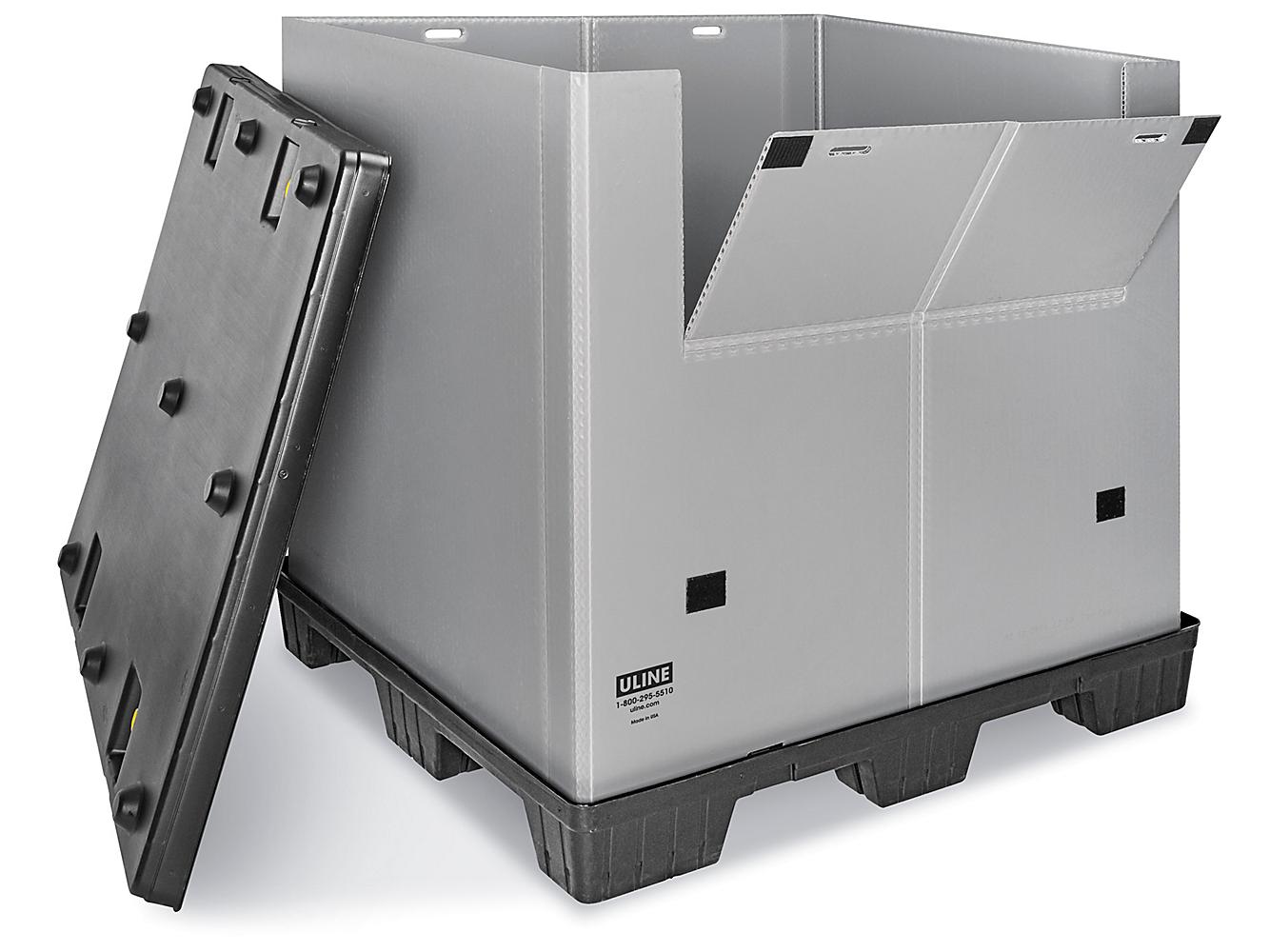
Bulk plastic containers serve as an important part in various sectors, promoting the storage and transport of products. These containers are generally made from robust materials such as high-density polyethylene (HDPE) or polypropylene, which supply resilience and resistance to environmental variables. Their style frequently includes functions like stackability and modularity, enabling effective use of space during both storage space and transit.
Industries such as farming, food processing, and producing often utilize bulk plastic containers because of their lightweight nature and convenience of handling. The containers come in various sizes and arrangements, dealing with the certain needs of different items. Their adaptability extends past plain capability; they can additionally be customized with lids, deals with, and labeling options to enhance functionality - plastic bulk containers. Consequently, bulk plastic containers play a vital role in maximizing logistics and supply chain operations across numerous markets, therefore contributing to overall efficiency and cost-effectiveness
Advantages of Making Use Of Mass Plastic Containers in Recycling
The application of bulk plastic containers considerably enhances the effectiveness of the process when organizations prioritize reusing efforts. These containers are designed to optimize area, enabling for the storage and transport of bigger quantities of recyclable materials. This leads to less trips to recycling centers, thereby reducing gas intake and connected discharges.
Additionally, mass plastic containers are immune and durable to numerous ecological variables, guaranteeing that products continue to be shielded throughout handling and transit. Their lightweight design further adds to decrease transport expenses.
Additionally, the harmony of these containers helps with better sorting and handling of recyclable products, which can boost overall recycling rates - plastic bulk containers. Organizations that take on bulk plastic containers also demonstrate a dedication to sustainability, positively influencing their brand name image. Ultimately, these benefits not only streamline reusing methods yet also contribute to broader environmental goals
How Bulk Plastic Containers Facilitate Material Collection
Effective material collection is considerably improved by the use bulk plastic containers, as they supply a structured and efficient service for gathering recyclable things. These containers are developed to accommodate large volumes of products, which simplifies the sorting and storage procedure. Their stackable layout optimizes space utilization, making it easier for facilities to organize recyclables without clutter.
Furthermore, bulk plastic containers are weather-resistant and resilient, enabling outside placement without deterioration. This resilience assures that products continue to be secured up until they are collected for handling.

The uniformity in shapes and size of these containers promotes standardization across collection factors, enabling far better monitoring of recyclable volumes. Moreover, their clear nature permits for very easy presence of materials, aiding in the surveillance of contamination levels and guaranteeing that only appropriate materials are gathered. Generally, mass plastic containers play a critical role in improving the product collection process, therefore promoting efficient recycling techniques.
Transportation Effectiveness and Environmental Influence
Transportation effectiveness plays an essential duty in the recycling process, specifically through the optimization of lots ability in bulk plastic containers. By making best use of the quantity of material delivered, business can significantly lower the number of trips needed, consequently lessening their carbon footprint. This method not only enhances operational effectiveness however also contributes to more lasting environmental methods.

Enhancing Load Capacity
Enhancing load capability is frequently neglected, it plays a crucial function in enhancing transport efficiency and decreasing ecological influence in recycling practices. By optimizing the volume that bulk plastic containers can hold, reusing procedures can minimize the number of trips needed for transport. This not just lowers gas consumption but likewise lowers the wear and tear on automobiles. Reliable lots monitoring permits centers to use space effectively, making sure that each transport cycle is as efficient as feasible. Additionally, well-optimized lots can bring about better settlements with logistics suppliers, possibly minimizing general prices. Eventually, enhancing tons capability adds to a more sustainable reusing system by cultivating effective resource use and minimizing waste created throughout transportation.
Decreasing Carbon Impact
As recycling procedures endeavor to decrease their environmental influence, reducing the carbon footprint connected with transport arises as a crucial goal. Mass plastic containers play a critical duty in achieving this purpose by enhancing load performance and optimizing logistics. Their light-weight yet resilient layout enables for optimum freight area usage, minimizing the number of journeys called for to move products. By settling deliveries, reusing centers can lower fuel consumption and greenhouse gas exhausts. In addition, tactically situating recycling centers reduces transportation distances, additionally lowering carbon outcomes. Utilizing fuel-efficient vehicles and alternate energy resources improves total sustainability. By incorporating these practices, the recycling sector can significantly reduce its carbon footprint, adding to a more sustainable future.
Obstacles in the Usage of Mass Plastic Containers
Contamination Problems
Contamination problems stand for a considerable difficulty in the reliable use bulk plastic containers within recycling practices. These containers frequently build up residues from previous contents, leading to mixed materials that can impede the recycling procedure. Contaminants such as food waste, chemicals, or non-recyclable products can endanger the honesty of the entire batch, causing increased disposal costs and decreased reusing rates. In addition, improper cleaning or sorting can intensify these problems, making it hard for recycling facilities to refine materials efficiently. The visibility of contaminants not just impacts the top quality of recycled products but likewise threatens the overall sustainability efforts targeted at reducing plastic waste. Resolving these contamination difficulties is critical for improving read here the effectiveness of mass plastic container recycling.
Recycling Facilities Limitations
Inefficiency in reusing framework presents substantial difficulties for the efficient monitoring of bulk plastic containers. Several reusing facilities do not have the capacity to process large quantities of these containers effectively, causing increased hold-ups and costs. Additionally, insufficient sorting innovations frequently result in contamination, as bulk containers may be mixed with various other products, making complex the reusing process. Limited transport alternatives likewise prevent the activity of bulk plastic containers to suitable reusing facilities, resulting in boosted land fill waste. Additionally, a lack of standardized methods for mass container recycling produces complication amongst customers and services, even more making complex efforts to promote sustainability. Attending to these facilities restrictions is necessary to improve reusing methods and take full advantage of the potential of bulk plastic containers in a round economic situation.
Best Practices for Executing Mass Plastic Containers
When organizations consider executing mass plastic containers in their recycling techniques, they should focus on a tactical approach that improves performance and lowers contamination risks. Initially, picking the suitable container dimension and kind is vital to fit the quantity of materials being processed. Organizations ought to additionally develop clear labeling and signage to direct customers on appropriate disposal approaches, minimizing confusion and mistakes. Routine training sessions for team can better reinforce these techniques, making certain everyone comprehends their functions in maintaining reusing integrity.
Additionally, companies should implement a routine maintenance schedule to examine and tidy containers, preventing the buildup of pollutants. Partnering with regional recycling facilities can likewise improve the collection process, making certain that materials are successfully processed. Companies must monitor and assess their recycling metrics, using this information to fine-tune practices over time and advertise constant enhancement in their sustainability initiatives.
The Future of Mass Plastic Containers in Sustainable Practices
As organizations progressively focus on sustainability, the role of bulk plastic containers in reusing methods is readied to develop significantly. Innovations in products science are leading to the growth of biodegradable and recyclable alternatives, boosting the ecological advantages of bulk plastic containers. Furthermore, the execution of closed-loop systems will certainly enable simpler collection and repurposing of these containers, lowering waste and source usage.
Technical developments, such as clever radar, will certainly enable firms to keep an eye on the lifecycle of mass containers, enhancing performance investigate this site in reusing processes. As consumer demand for sustainable methods grows, companies will likely embrace mass plastic containers developed for reuse and long-lasting worth. Partnership between governments and industries will foster the facility of standard reusing methods, guaranteeing that bulk containers are successfully incorporated into broader sustainability efforts. Overall, the future of mass plastic containers appears promising, with considerable capacity for adding to a circular economy.
Often Asked Inquiries
Exactly How Are Mass Plastic Containers Made and What Products Are Made use of?
Mass plastic containers are typically made from high-density polyethylene (HDPE) or polypropylene (PP) These materials are refined through injection molding or impact molding methods, leading to long lasting, light-weight containers ideal for numerous storage space and transport demands.
Can Bulk Plastic Containers Be Recycled Numerous Times Before Recycling?
Yes, bulk plastic containers can be reused multiple times prior to recycling. Their resilience and design enable repeated use in different applications, advertising sustainability and resource effectiveness while reducing the demand for brand-new containers.
What Certifications Exist for Bulk Plastic Containers in Recycling?
Numerous certifications for bulk plastic containers include the Recycling Partnership's qualification, the Cradle to Cradle Licensed ™ requirement, and the Lasting Packaging Union's guidelines, guaranteeing containers satisfy specific environmental and recyclability requirements for efficient recycling.
Just How Do Mass Plastic Containers Contrast to Various Other Recycling Storage Options?
Mass plastic containers offer higher durability and capability contrasted to various other recycling storage space choices, reducing the danger of contamination and facilitating reliable transport. Their style sustains much better organization, improving general performance in reusing procedures.
What Is the Life-span of a Bulk Plastic Container in Recycling Processes?
The lifespan of a bulk plastic container in reusing processes usually ranges from 5 to 10 years, depending on use, worldly high quality, and environmental conditions, enabling for numerous cycles of use prior to eventual disposal or recycling.
When companies focus on reusing efforts, the application of mass plastic containers considerably improves the effectiveness of the procedure. Transportation performance plays a vital role in the recycling procedure, specifically with the optimization of tons capacity in mass plastic containers. The usage of mass plastic containers in recycling techniques deals with substantial difficulties, especially worrying contamination problems and constraints within reusing facilities. Contamination issues represent a significant challenge in the effective use of mass plastic containers within reusing methods. When organizations take into consideration carrying out bulk plastic containers in their recycling methods, they should prioritize a calculated method that improves efficiency and decreases contamination risks.